
Competence in Jiu Jitsu is never simply a product of time spent on the mats. Time matters, of course, but only when it is spent solving problems that sit at the appropriate edge of your present ability. When training is too comfortable, you spend your rounds repeating what you can already do. When it is too difficult, you lose access to the information that would actually help you, and the round becomes an exercise in survival rather than learning. Development is accelerated in the space that lies between those two extremes, and understanding that space is one of the most useful things a serious student of Jiu Jitsu can do.
The psychologist Lev Vygotsky described this space as the Zone of Proximal Development, now commonly shortened to the ZPD. He defined it as the distance between what a person can accomplish independently and what becomes possible for them with suitable guidance, support or carefully calibrated resistance. It is a concept built for the classroom, yet it offers an unusually precise way of approaching Jiu Jitsu whenever you want your training to produce competence that genuinely transfers into live application.
The Zone Where Your Learning Becomes Possible
It helps to think of your training as moving across three broad zones. Your comfort zone contains the techniques, positions and decisions you can already manage without assistance. If you can reliably complete a scissor sweep against an inexperienced partner, continuing to repeat it under those same familiar conditions may reinforce the movement, but it will do very little to develop it further.
At the opposite end sits the panic zone, where the gap between the problem in front of you and your present ability is simply too wide to bridge. A novice placed beneath the fully applied pressure of an experienced black belt may well be exposed to excellent Jiu Jitsu, yet exposure of that kind is not the same thing as learning. When the speed, complexity and resistance of what you are facing prevent you from recognising what is actually happening, there is very little meaningful information left for you to use.
Between these two extremes lies the Zone of Proximal Development. Here you can understand the problem in front of you and take part in finding its solution, even though you cannot yet solve it consistently on your own. You might be able to escape side control once your partner moderates their pressure, recognise an armbar when a more experienced partner leaves you a narrow opening, or retain guard when the pace of the round allows you enough time to perceive the relevant grips and angles. You are stretched beyond independence, but you have not been removed from the learning process altogether.
Your Challenge Must Match Your Capability
Mihaly Csikszentmihalyi’s work on flow describes a closely related relationship between challenge and capability. When a challenge sits too low, attention drifts towards boredom, and when it climbs too high, anxiety soon begins to dominate. Deep engagement becomes possible only when the difficulty of the task is closely matched to your ability, and this is precisely why the ZPD represents such productive territory for a student to occupy.
Steven Kotler has popularised the idea that an effective challenge may sit roughly 4% beyond your established capability. The figure should be treated as a useful heuristic rather than a precise calculation to apply to any given sparring round. Its real value lies in reminding you that meaningful progress usually comes through a manageable extension of what you can already do, rather than through some dramatic leap beyond it.
Challenge itself should be judged by far more than the amount of resistance your partner offers. Complexity, speed, fatigue, confidence, anxiety, consequence, starting position and the level of support available to you all contribute to the total demand placed upon you. A technique may sit comfortably inside your ZPD while you are fresh, and become entirely inaccessible once you are exhausted, in the same way that a complex movement can remain learnable when both resistance and speed are reduced. Effective practice keeps the problem difficult enough to require genuine adaptation while remaining clear enough for you to investigate it properly.
Learning Will Not Always Look Like Improvement
Kicking coach Dave Alred MBE uses the term Ugly Zone to describe the territory just beyond your current ability, the place where intention and execution no longer match each other perfectly. It should never replace the ZPD as your guiding framework, since the ZPD remains the standard by which you decide whether a task is developmentally appropriate in the first place. Instead, it simply describes what practice inside that zone tends to look and feel like once you are in it.
As the challenge in front of you increases, a previously reliable solution may begin to lose its stability. Your timing becomes uncertain, familiar movements start to feel awkward, and errors appear more frequently, because the solution you already possess is being asked to cope with a problem it was never designed to manage. A better solution may well be emerging beneath the surface, but it has not yet accumulated enough experience to become dependable. This temporary untidiness should not automatically be read as evidence that the session is failing – it can just as easily be evidence that genuine adaptation is taking place.
This requires you to learn the difference between immediate performance and lasting learning.
A polished session may allow you to display what you already know without improving your ability to retain or transfer it, while a more difficult and untidy session may look considerably less impressive precisely because it forces you to perceive, decide and adjust in real time.
In another post I discussed why you should Stop Making Jiu Jitsu Hard, difficulty should never be manufactured for its own sake. Productive instability is purposeful and bounded, whereas uncontrolled struggle simply pushes you out of the ZPD and into the panic zone.
Practice Does Not Make Perfect
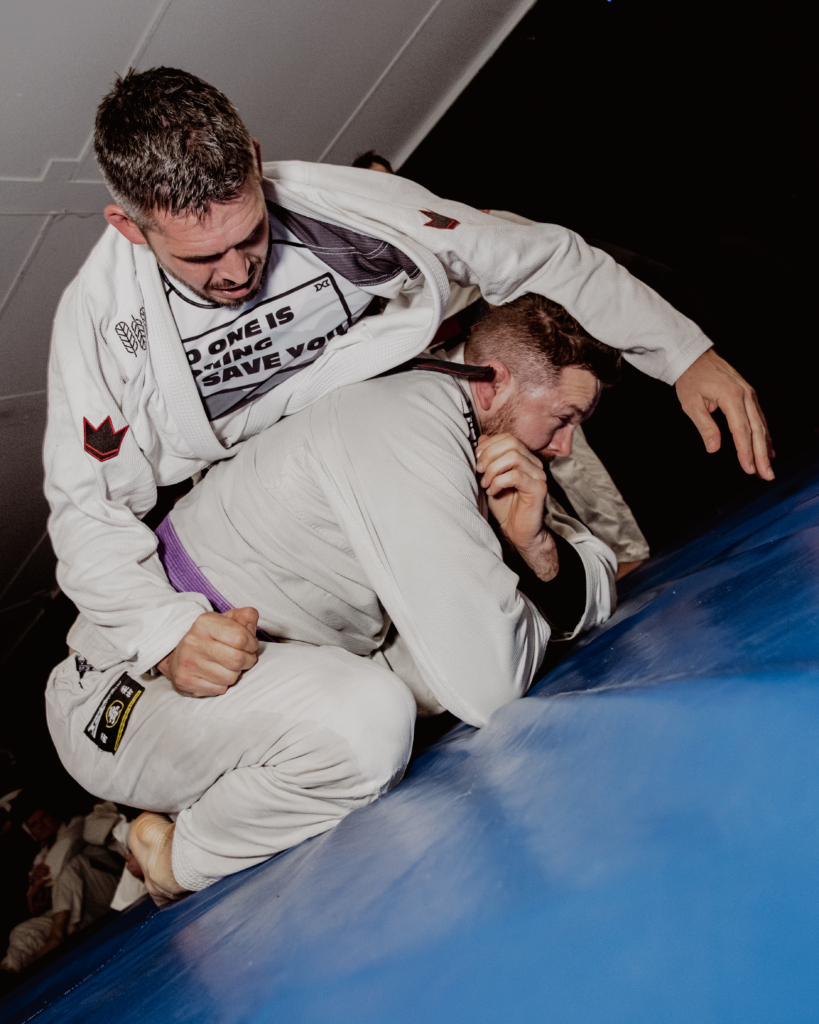
The old claim that practice makes perfect does not withstand much scrutiny once you examine it closely. Repeated exposure to a movement does nothing to guarantee that the movement is understood or performed well. A more honest warning would be that practice makes permanent, because repetition strengthens whatever you repeatedly do, including poor alignment, unnecessary tension and ineffective decisions.
Even that revised statement does not go quite far enough. Practice conducted inside the Zone of Proximal Development is the far more useful driver of success, because it combines repetition with appropriate difficulty, relevant feedback and the genuine possibility of correction along the way. You are not simply making a movement permanent in this case. You are developing a response capable of surviving changes in resistance, timing, body type and intention.
This also means that a single successful repetition should never be mistaken for real competence. A sweep may succeed because your partner loses their balance, relaxes at the wrong moment or leaves you an opening you did not consciously recognise at the time. For that learning to properly transfer, you need to understand which piece of information actually mattered, what adjustment produced the outcome, and whether you are able to recreate the solution once the conditions change.
Building and Removing Your Scaffold
Vygotsky described support offered by what he called a more knowledgeable other, a role that in Jiu Jitsu is naturally supplied by your coaches and your more experienced training partners. A coach can divide a movement into manageable stages, correct your position, reduce the number of decisions available to you and direct your attention towards information you have not yet learned to notice. Together, these interventions create a temporary scaffold around your learning.
Positional sparring offers one of the clearest examples of this scaffold in action. Rather than asking you to find a newly learned escape somewhere within an unrestricted round, your coach can place you directly into side control, limit your partner’s available attacks and moderate the pressure being applied. As your framing, timing and movement steadily improve, those restrictions are progressively removed until the escape must eventually function within ordinary, unmoderated sparring.
The scaffold should always guide your search rather than complete it on your behalf. If every movement is prescribed in advance and every response is already known, you may become highly competent at reproducing a demonstration while remaining entirely unable to recognise the same opportunity when it appears in live Jiu Jitsu. Your practice must eventually contain the pressure, movement and decisions that make the skill necessary in the first place, because transfer depends upon learning to perceive information from your partner and connecting that information to an appropriate action.
Steal the Right Rep
I have also mentioned here before, that proficiency will increase dramatically if you can Learn to Steal a Rep, I argued that training should never be measured purely by the number of repetitions you accumulate over a session or a week. You should also consider the quality and the relevance of each repetition you take, and the ZPD provides the standard by which that value can properly be judged.
A useful rep asks you to do slightly more than you were previously capable of. Perhaps your partner offers enough resistance to expose a weakness in your structure without preventing you from correcting it, or a higher belt creates an opening narrow enough that you must recognise it for yourself rather than simply follow instructions towards it. The rep becomes especially valuable once you can identify why it worked, adapt it to a slightly different response, and begin to reproduce it without needing further assistance.
The objective, then, is not to collect accidental victories or to endlessly repeat compliant movements against a willing partner. It is to steal the rep that develops perception, timing and decision making alongside the physical action itself, because that is the rep most likely to remain available to you once cooperation disappears entirely.
Taking You From Inept to Adept
At my Jiu Jitsu academy, our methodologies are designed to take you from inept to adept, developing you into a proficient and efficient Jiu Jitsoka along the way. Understanding the ZPD explains precisely how that transformation happens. Development is never left to random exposure, and difficulty is never treated as proof of useful learning in itself, instead, the problems you encounter evolve alongside your growing ability to solve them.
When you are inept, you lack both the solution to a given problem and the ability to recognise much of the information surrounding it. The learning environment must therefore reduce complexity, clarify the objective and provide sufficient support to allow you to begin participating successfully. As you become adept, that support is gradually withdrawn, the range of possible responses expands, and greater resistance requires you to make decisions with progressively less time to think them through.
Proficiency develops as your Jiu Jitsu becomes dependable across different partners and different conditions. Efficiency develops as you learn to perceive the important information sooner, discard what is irrelevant and produce the required response without unnecessary movement or wasted effort. The experimentation that takes place within the Ugly Zone may initially look inefficient, but when it is carefully contained within your ZPD, it allows you to discover solutions that are economical, adaptable and genuinely your own.
Avoid Practice That Produces No Adaptation
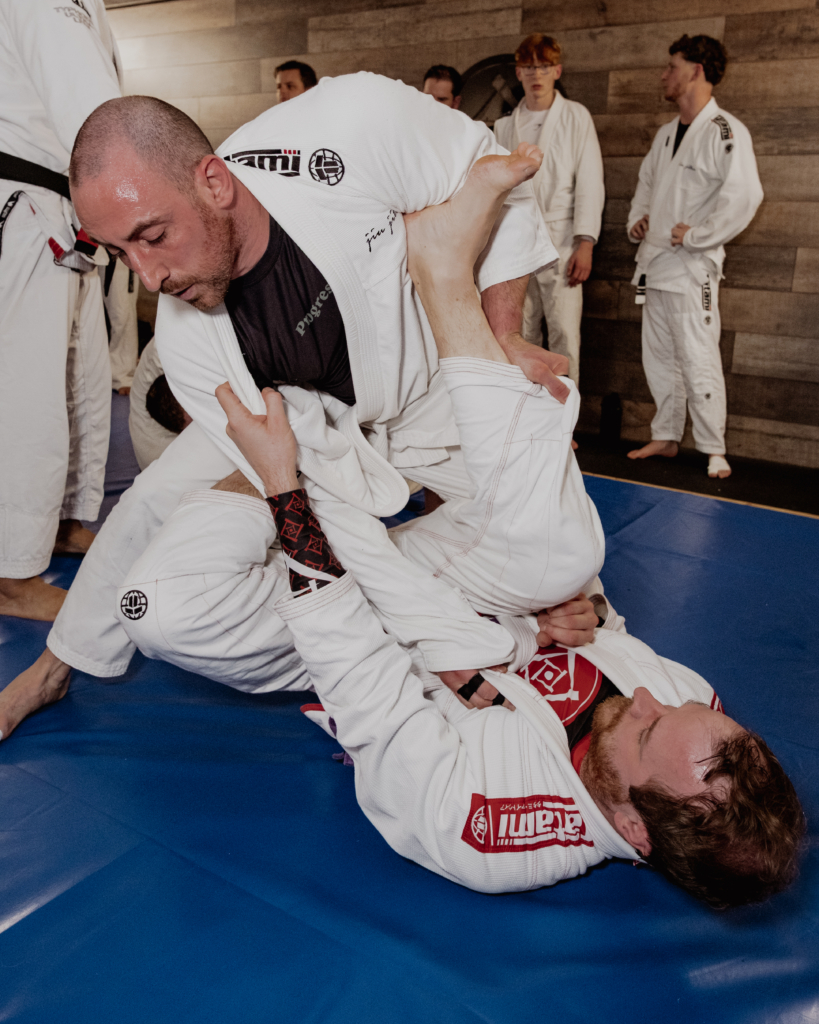
If you want to extract the greatest possible transfer from your learning environment, you must become far more discerning about what you actually practise. Avoid spending excessive time in situations that are so familiar to you that they demand no new perception or adjustment whatsoever. Equally, avoid confusing exhaustion, domination or complexity with genuine development whenever those conditions prevent you from understanding the problem you are supposedly trying to solve.
Two obvious examples stand out here. First, arriving at an open mat with no plan for practice – this just encourages ‘playtime’, and although it is most definitely ‘fun’ it is far less productive than a structured approach to your training. And second, jumping into an advanced sparring class as a novice, you might think that rolling with higher belts will ultimately push you along the road in the long-term, but this is doing far more harm that good for your habit-forming, understanding and skill acquisition.
You should also remain cautious of practice that strips away the information present in live Jiu Jitsu. A movement rehearsed against a partner who always reacts in exactly the same way may become fluent without ever becoming functional. Useful practice preserves enough realism for you to read changes in posture, pressure, balance and intention, while still controlling the difficulty sufficiently to keep those cues genuinely available to you.
The same principle applies equally to feedback. Constant correction can make a session look cleaner on the surface while denying you any real opportunity to solve something independently, whereas no feedback at all allows poor habits to become firmly established. The appropriate amount of support is whatever amount keeps you engaged with the problem for as long as possible, before gradually leaving you fully responsible for its solution.
Your Competence Moves the Zone
As you spend time working within the Zone of Proximal Development, what once required instruction, reduced resistance or encouragement slowly begins to become available to you without assistance. The scaffold is removed, the movement settles into your comfort zone, and your competence expands accordingly. Your ZPD then moves forward in turn, placing more advanced problems within reach and beginning the entire process again.
This is why becoming genuinely good at Jiu Jitsu is never a matter of remaining comfortable, nor is it a matter of making every session as brutally hard as possible. It is the repeated act of training at the edge of your ability, a place where failure remains informative, success must be properly earned, and support is available without ever removing your own responsibility to learn. Once you understand that boundary clearly, you can stop judging your practice by how easy it looked, how exhausted it left you or how many repetitions you managed to complete, and begin judging it instead by the adaptation it actually produced within you.