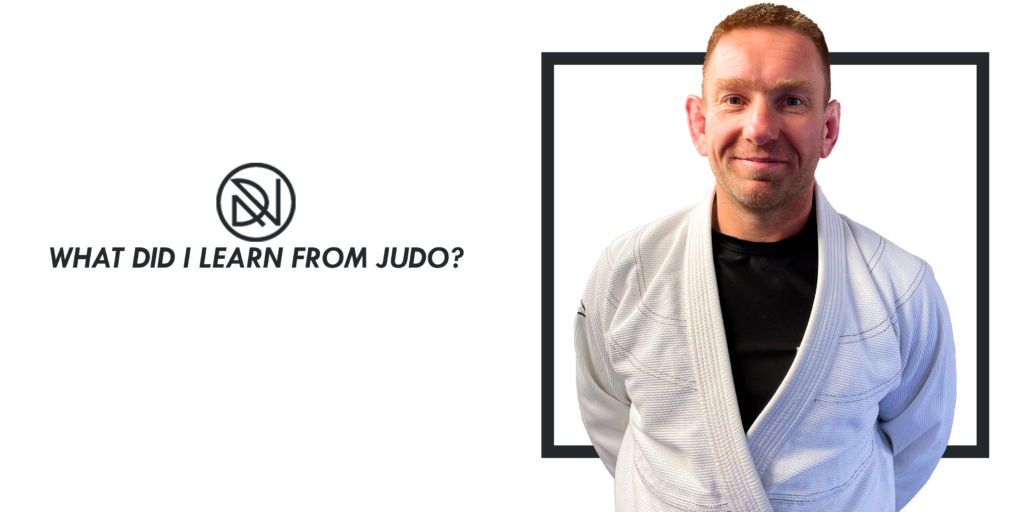
I am extremely fortunate to be in the position I am today, able to essentially practice more frequently now but with the same fevered enthusiasm the thing that caught my attention as an eleven-year-old back in 1991.
Even though the disciplines have changed; I’m still able to direct my life in the direction of my choice because of the martial arts, the difference: I now get paid to do so.
Day to day I am fully invested in Brazilian Jiu Jitsu. As a coach, I’m responsible for a full-time facility, I have well over one hundred training partners that I engage with across a given week and head up a sizable network of affiliate and associate gyms led by a talented leadership team that next year celebrates 25-years of operation.
I’m a fan of Jiu Jitsu, I love watching it, I keep up with it like any other sports fan would, and I stay current with any new technical innovation, which by itself is a full-time occupation. However, here is the contention – given the choice between training Jiu Jitsu in Brazil versus an opportunity to experience the Kōdōkan and the various top university stables in Tokyo, I’d take Japan every time!
Sorry. (Not sorry).
WHY JUDO?
Stepping onto the tatami for my first Judo session presented a realisation, a revelation if you like. As “traditional’ as my Karate upbringing was, Judo was real – no false pretence and no flamboyance – I had learned from true champions in the Karate dojo, they were real, as are the many other coaches from whom I have learned over the years but, if you’ve ever gripped up with a Judoka; hell, ever tried to move against one, regardless of weight, you would be shocked at how physically strong they are.
I graduated from university in 2001; my sports science degree course was a three-year course at the old Landsdowne Campus at De Montfort University in Bedford. The course was an extension to a two-year Higher National Diploma (HND) that I’d studied in the same subject to get onto this degree course.
Naively, I didn’t attend much for the two years of the HND and probably less for the degree, as I’d skip class to drive up and down the UK to attend Karate workshops and seminars, of course, all funded by my student loan.
I would get a call from training partners in the morning that a workshop was happening at the University of York that evening or at Birmingham’s Cocks Moors Woods Leisure Centre, I would ditch some of the most important lectures of my course to drive north, up the A1, M1 or grab my trusted A-Z map and travel into London to meet a friend, to go and learn from Sensei Enoeda at his famous Marshall Street dojo in Soho – I spent more time wearing my Gi inside a dojo than sat at any desk in the lecture hall or seminar room.
Towards the end of my degree course, I was training in dojos of friends across the region all the time and had three dojo of my own: Borehamwood, Barnet and Potter Bar (North London/South Hertfordshire) but, my attention was declining, and intentions were clearly changing.
I’d fallen on my feet with Karate as a kid – I was very lucky – my instructor had pedigree, but this only takes you so far when the system you’re learning doesn’t evolve. All in I spent twenty years training Karate [from 1991 until 2011]. When you spend this long leaning in and pursuing a craft, you get pretty good. But, spending so long engrossed in that one thing; the practice and that environment meant I was surrounded by people that believed their own hype, I too had developed a blinkered approach to everything we did, including accepting there were other things outside of my lane.
In retrospect, I could feel I was just going through the motions. Pounding those wooden floorboards with my bare feet, justifying in my own head, why I was drilling useless stale patterns, holding an overly lengthened, deep stance or being proud that I could kick faster and higher than those blindly doing the same to my left and right.
By now I had started working as a doorman, at 19 years old it felt crucial to prove myself; I was the youngest by some 12 years and the lightest by around 40kg – the head doorman used to joke he’d be able to press me above his head for reps, whilst another said he could curl me – both true.
I spent much of this time posturing, seeking out nuisance and troublemakers, internal validation I suppose; often getting far more involved than necessary, arriving at problems first but frequently reprimanded for running ahead into problems that could have caused its own collateral damage if things went sideways.
I firmly believe that acting like this was my subconscious attempting to prove I had skills. I had spent so much time training in an environment full of pretence and charade that I probably needed to prove to myself I could do a decent job. Luckily our door team were old hands, that kept me in check; they had worked together for years, effectively radiating an assured confidence. They could pre-empt trouble, seemed to know what each other were thinking, there was no need for front or posture with them, and whether they knew it or not, they could all grapple.
This was the endorsement I needed; it was time to change tack.
‘Shoot-fighting’ and small No-Holds-Barred events were now springing up across the country, these caught my attention, Karate had little to no substance or purpose for me anymore.
By now, I’d started cross training some traditional Ju Jitsu in Borehamwood but even this didn’t resonate totally. One day; a new training partner, Miguel ‘Miggy’ Camacho, looked at me during a Ju Jitsu class [he could tell] and said “you know, there’s a gym in Kilburn I think you should go to. I think you’d love it!”
On Monday 20 November 2000, my best friend and I travelled into London, we had found a new passion via the London Shootfighters gym in Kilburn where we’d learn from Alexis Demetriades, his brother Marios and Paul Ivens. Enamoured by this new training environment in Kilburn, I began supplementing what is now known as no-Gi submission grappling with some Brazilian Jiu Jitsu at London’s Tokei Martial Arts Centre on Magdalen Street, a stone’s throw from Tower Bridge.
The classes were coached by a brown belt named Ronaldo Campos (now a black belt of multiple years and living in the United States) under the Brazilian Top Team banner, several of the guys from that training room are now high-ranking black belts in the UK. Soon, travelling in from Cambridge where I was living at that time was hard work, so I stopped and began looking for somewhere else to train in the Gi.
Every day I drove into and out of Bedford knowing there was a Judo club, a very good, well respected Judo club in the town, and I had to go there; it just took me some time before I made that pivot and invested everything into starting over again.
PURE ARTISTRY
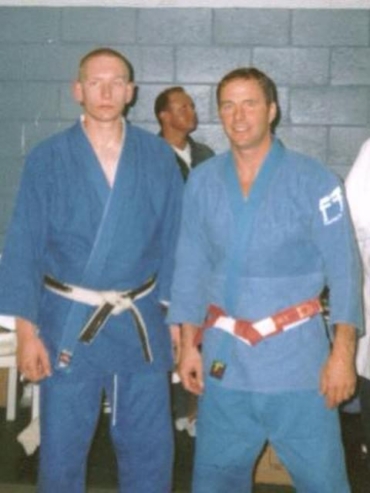
In 2001 I attended my first Judo seminar and whilst it wasn’t at Bedford Judo Club (BJC), it certainly set my mind on to an enlightened path that meant it was only a matter of time before I became a full member at BJC.
I’m not sure how I found out about the Neil Adams Effective Fighting seminar at the Birmingham NIA, but here I was, wearing my new reversible white/blue Judogi raring to learn from the greatest Judoka the UK has ever produced – Neil Adams MBE – I was like a rabbit in the headlights.
Oh, and I wore my Karate black belt too. What a f*cking idiot!
The seminar was amazing, Neil shared his infamous Tai Otoshi to rolling Juji Gatame as well as variations, which led to the Sankaku Jime that I can remember to this day. The way he effortlessly threw his Uke around was mesmerising, so much speed, agility and precision but at the same time no aggression or forced movement, it was pure artistry, honed through years of repetition.
Later in the day, the time came for randori (sparring), I was paired with a lad who wore a Team GB kimono. At the time, I didn’t know what that meant; he had a union flag embroidered on his chest and it looked cool, he wore a pristine black belt and looked for another with which to train, me.
I had a pretty good Ashi Barai from Karate and without any hesitation, straight off the command: “Hajime”, swept him before we had even gripped up.
“Here we go!” I thought.
Here we go indeed. He got up, straightened his jacket, nonchalantly adjusted his perfect belt, gripped up and launched me (launched me!) with a Morote Seio Nage.
I’d just been hit with planet earth.
For the first time, now with no air left in my lungs, I had fully experienced the honesty and severity of technical Judo: I truly had “f*cked around and found out!”
Previously, I’d been caught heavy a few times during Karate kumite but because things were never 100% and mostly pulled to exercise a level of control or “kime” (focus) you could kid yourself that luck was involved. Being thrown so effortlessly just reinforced something I already knew deep down; time to shift, time to learn Judo.
BACK TO BEDFORD
In my mind, it took a lot of courage to start Judo, but truthfully, I was welcomed with open arms and the one thing I did have was a rudimentary knowledge of Japanese, essentially how it was applied to parts of the body, directions, commands and actions, this put me ahead of most beginners when it came to learning the basics so I could concentrate more on the applied side of things and mechanics.
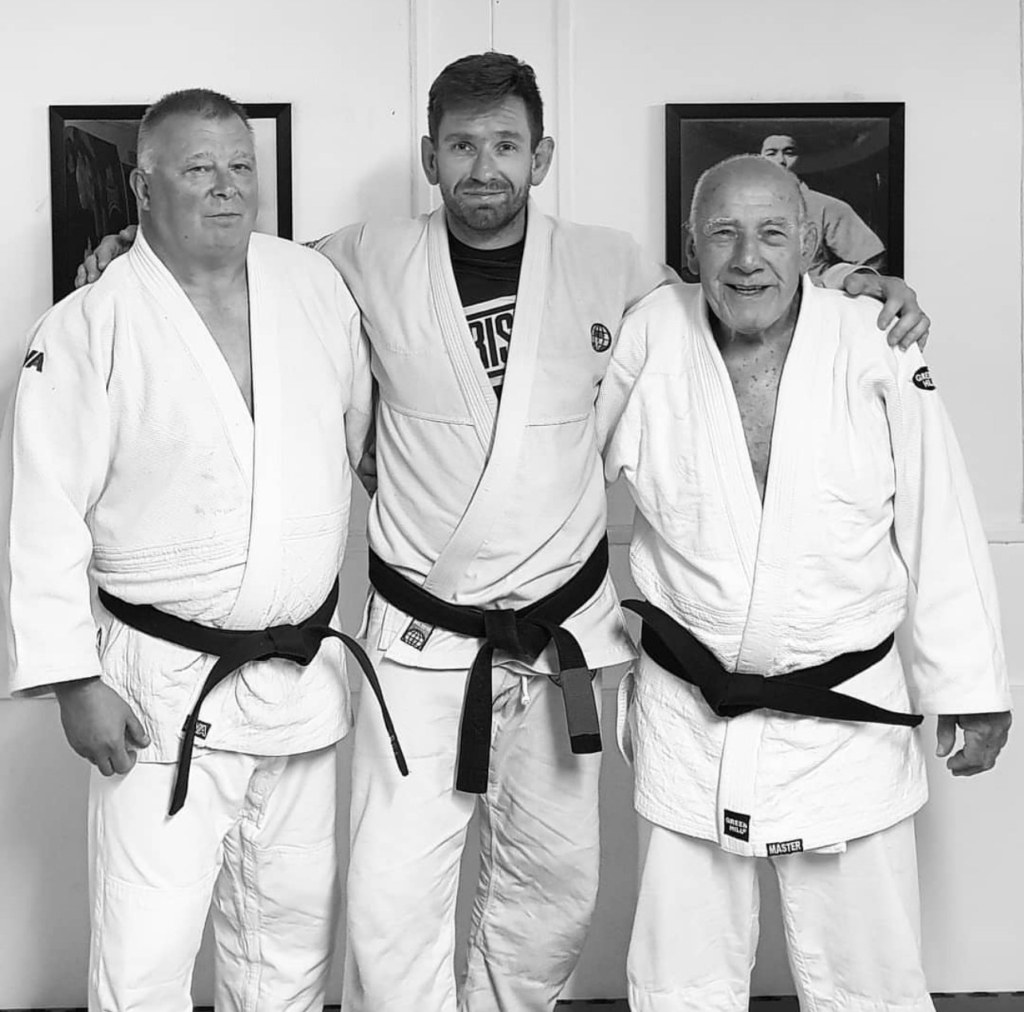
Bedford Judo club was established in 1951, the amalgamation over time of two clubs, one a BJA (British Judo Association) and the other, a BJC (British Judo Council) affiliate, I would train every Monday and Thursday and my main coaches were Robin Gell and Stephen Sweetlove MBE, both highly revered, 6th degree black belts.
Monday evenings were set aside for heavy randori, whilst Thursday was scaled back and more technical in delivery. It was the Monday’s I enjoyed, and it wasn’t until a while after I started that I realised judoka from all over the region would travel to Bedford just for the randori – I loved it, I got murdered over and again, every session.
I distinctly remember getting into my car after my first official Judo class with the biggest smile ever – it was the same smile I’d had after my first Karate class as an eleven-year-old. I was hooked and the sempai at the dojo could see it, they were all super generous in the advice they’d offer and forthcoming with any technical encouragement or tuition.
MARKED PROGRESS
As a kid, I’d flown through the gradings in Karate; every 3 months, without fail, I’d know the date, make sure I was ready and be set to demonstrate my Kihon (basics), Kata (forms) and Kumite (sparring) drills, passing every time: 9th kyu to 1st kyu and, in December 1996, I passed my 1st degree black belt under the auspices of Sensei Kienosuke Eneoda (the ‘Shotokan Tiger’) who had arrived in England in 1965, he was the 1963 All Japan Karate champion and then the Chief Instructor to the Karate Union of Great Britain.
I was ecstatic.
At the time, I thought I was immortal, but after a few weeks of Judo simply realised how wrong I was.
Gradings in Karate were easy, you just had to memorise techniques and if you were athletic, moved with enthusiasm and (sounded) aggressive with it, you’d pass. An examiner, who you had never met, would assess your demonstrations and provided there were no major mistakes; you would be awarded your next belt.
Judo was a different animal. You had to fight for your belt.
Total integrity.
Paired with individuals of a similar weight and experience, your examination consists of ‘Shihai’ or competition. Under Judo rules and in front of other candidates and spectators you would compete, a victory by either a throw with force, speed and control (back then we had four scores: Yuko, Koka, Waza-ari and Ippon, now just the latter two), a hold-down (then for 30 seconds, now 20 seconds) or a submission (joint lock or strangle).
If you won you would receive your new grade: 6th Kyu to 1st Kyu (red, yellow, orange, green, blue and brown), there was also some rudimentary technical knowledge that came along with each belt that got progressively more difficult as we moved through the ranks – “theory” if you like.
I skipped red, yellow and orange, my coach – the magnificent Robin Gell AKA. “The Bedford Strangler” found an old green belt as we tidied away the mats one Thursday evening and told me to be at the grading on Saturday!
Five months later I was a black belt.
Grading for a black belt in Judo is special, a true feeling of achievement.
On the day, 1st kyu judoka are paired off by weight and age; from here, you were given two matches, win both (via Ippon) and you are admitted to a “line up”, which involves three further bouts against other brown belts who have all attended the day for the same reason. To be successful, you must beat all three one after the other, with no rest, via throw, hold-down or submission.
On 07 July 2008, I completed my line up against three others, finishing all via submission (one Hadaka Jime, and two Juji Gatame), my third opponent took some time, elusive to the end; he’d watched me submit the two previous and played it well.
I loved the time I spent immersed in Judo; it added a new layer to me as an individual as well as my training. I’d already been bitten by the bug of martial arts at a young age; I’d become fascinated with martial movement, bushido and the Japanese culture, grasped what true perseverance meant and what could be achieved if you trusted the process. I understood true respect for an art.
Across this time, I’d been thrown hard more times than I care to remember, submitted with nasty, gnarly old school Judo and pinned by people half my size.
All of this kept me in check. So, together with fascination, perseverance and respect; it bred a level of integrity. I was humbled on many occasions; I’d started again as a white belt. I realised there was much more to be learned, and I adored it.
Just like Karate I would travel to other dojo as much as I could, to get some extra training in, one those places, a training hall that holds a special place in my heart is the Budokwai in Chelsea, London – the oldest martial arts hall in Europe. Established in 1918 and opened by the ‘Father of British Judo,’ Gunji Koizumi, the Budokwai sits alongside Chelsea’s multi-million-pound townhouses houses along Gilston Road, SW10, it’s a little out of place to be honest. The main dojo upstairs has a beautiful high-pitched roof with beams, the history is tangible in that room – it breaths Bushido.
Fast forward a few years to when I would occasionally visit to train Jiu Jitsu in the smaller downstairs dojo with Nicolas Gregoriades, I would get to the Budokwai early, walk upstairs and catch the end of some randori going on in the main Judo dojo – priceless memories.
Before I switched my focus away from Judo, solely to Jiu Jitsu, I would coach a class on Judo Ne-Waza at my academy. Purely groundwork, it was essentially Jiu Jitsu without the marketability, and because of this I had a great fortune to host a seminar with Ray Stevens.
Now remember I’d had plenty of exposure to National, European and World Champions whilst training and thought I understood “levels” but the unadulterated poise, power and precision I felt through my frame when Ray used me as his Uke cannot be described here.
Ray won a silver medal at the 1992 Summer Olympics in Barcelona; he did that with one functioning knee, when he visited my academy Ray was already a black belt in Jiu Jitsu under Roger Gracie and it is he that Mauricio Gomes (Roger’s father) credits for the early growth of BJJ in England, bringing its practice to the Budokwai in the late 1990’s.
Ray’s seminar consisted of some basic Uchi Komi (stepping in practice), an Uchi Mata (inner thigh throw) but, due to his knee injury, extensive coaching of the Sankaku Jime (a triangle strangle) from the turtled position.
“Levels”.
Thinking back, that evening evokes memories of being literally crushed by Ray’s legs, a guy who had drilled that technique incessantly, the exactness, the timing. Every time we reset to demonstrate the movement again, it was identical. When slowed to emphasise detail it was horrendous, the nuance he provided those in attendance showed a level of knowledge that only an Olympic athlete could possess.
All done with a level of sincerity, integrity and charm that Ray his renowned for – authenticity, veracity and charisma that only a practice like Judo will create.
INTEGRITY, HUMILITY & REALISATION
When I first started training martial arts, and like any eleven-year-old I guess; my target was always that next belt, the darker they got, the better you were. I was fixated on being better than the next person, comparing all the time – at that age it was only natural to be that way.
A black belt? Yes please. I didn’t care how hard I had to push myself to get one.
The question is: once I gained my black belt did it give me a sense of fulfilment?
As a 17-year-old, I felt immortal, but fulfilment? No.
So, did a black belt in Judo fashion any sort of satisfaction? Again no.
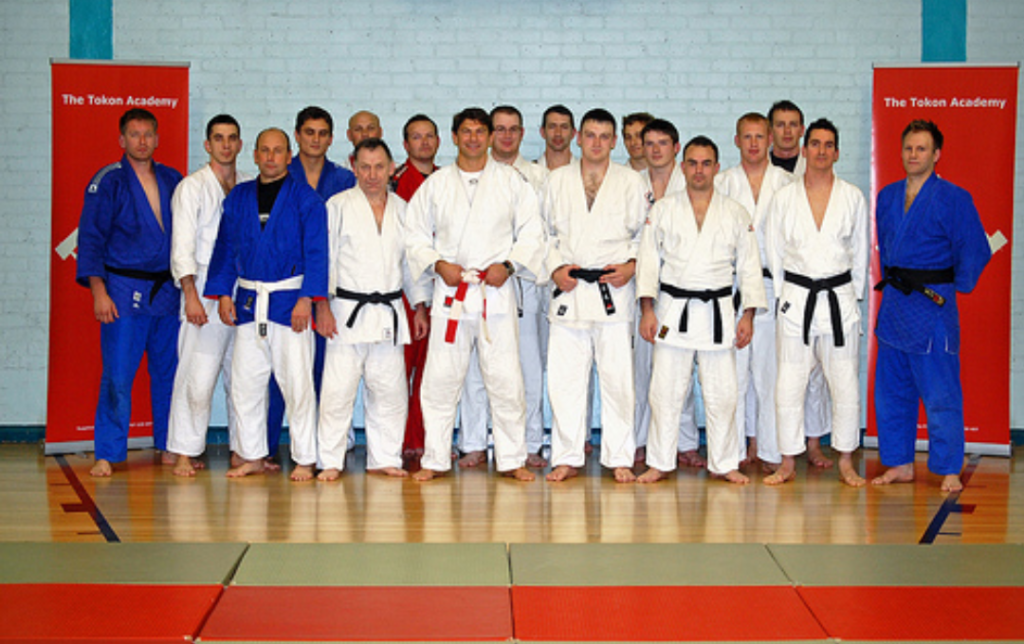
It only made me realise there were better people everywhere, noticeable levels to this that only insiders could and would appreciate. Being older now and having three children meant I was not the same person; naturally age had matured me and my way of thinking, but I am convinced the genuine, authentic approach to training that Judo conveyed altered my outlook, my deportment and behaviour.
I am so grateful to Judo, finding it plainly shaped the way my life progressed; if I had not begun Judo and found such positive role models, I can emphatically say that I would not be training at all today.
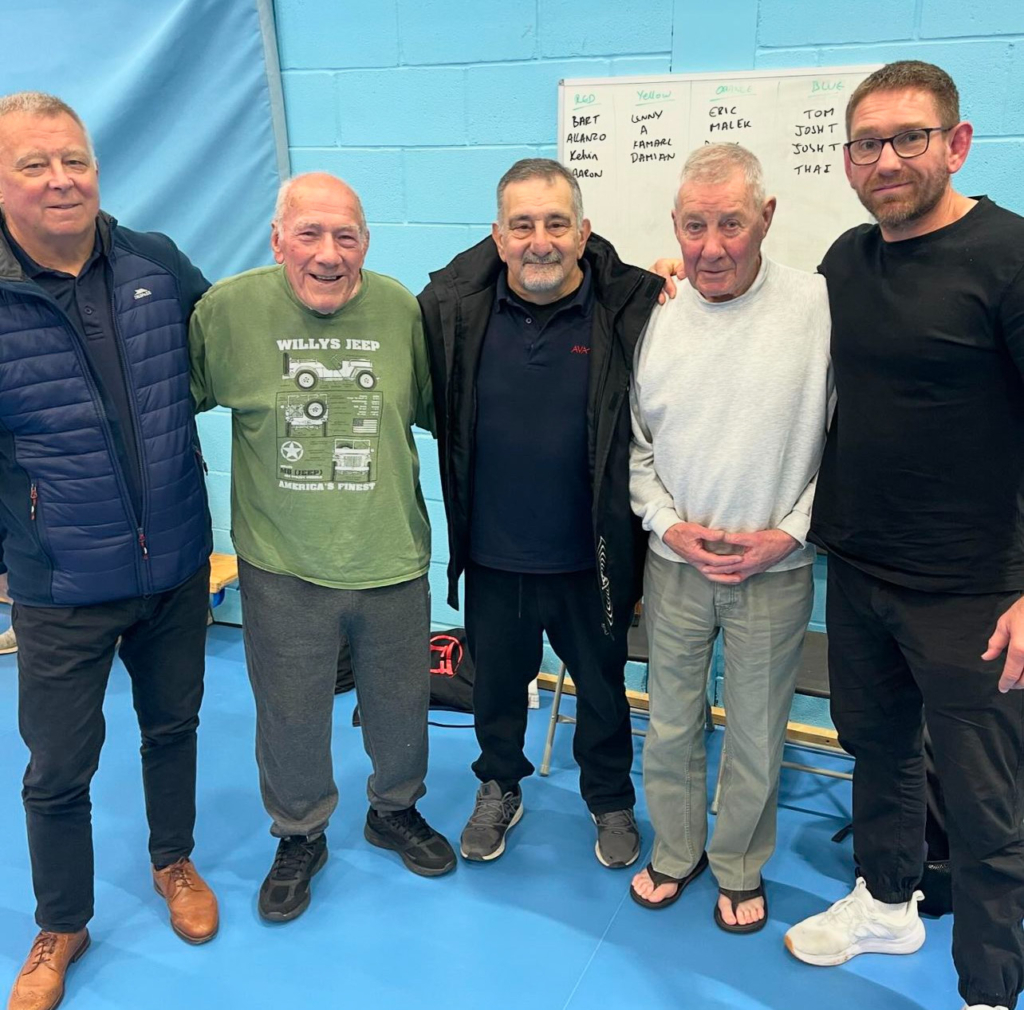
Judo is incredibly unassuming, it’s not loud or raucous, the players aren’t ostentatious, they have a respect for each other that you’ll be hard pressed to find elsewhere, the culture ensures that win or lose – Judo begins and ends with respect and whilst other disciplines expound this same precept, they don’t always practise what they preach.
Combat sport athletes (MMA fighters included) are just starting to appreciate the abundance Judo can offer; where Judoka used to cross-train Jiu Jitsu to improve their Ne-Waza, there wasn’t too much traffic in the other direction, today there is a consciousness to learning throws and takedowns, throws that land you connected in a position of dominance, and whilst only a few will give credit; innovations in reversals, positions and submissions are more often reclaimed old school Judo turnovers, pins and manipulations.
I’m pretty adamant, if you’re a Judoka who doesn’t invest time to improve groundwork or Ne-Waza or indeed, a Jiu Jitsoka who always starts a round from the knees, avoids Tachi Waza and is not actively seeking betterment in wrestling with a jacket, you only considering half the art. Judo and Jiu Jitsu are one and the same, just separated by rule-set.